Research and Planning of the exhibition
Summary
My research synthesis for unit 5 centralized problem-based learning in an active real-world studio environment. With this as the central theme, I curated an exhibition entitled CREATIVE CROWDING: Problem-Based Learning in an Active Real World Design Studio Environment. My research was about how we might use problem-based learning to ease meaningful engagement and industry practice for tertiary-level visual communication students. The material curated for the exhibition was derived from the research, practice and observation of students during an intercultural visual communication project presented for the Pedagogic Unit 4, submitted in December 2016.
Research and Plan
The plan for the exhibition began with feedback from my colleagues during the unit 4 project, where we discussed how we organize
I created an invitation and sent to 17 people from the college. I received confirmation from about 15. The invitation was mostly visual, with a large headline for the title. The invitation was sent using email management software, Campaign Monitor so I could track who was receiving the email, opening it or whether it bounced. One week before the exhibition date, I sent reminder emails and asked for confirmation.
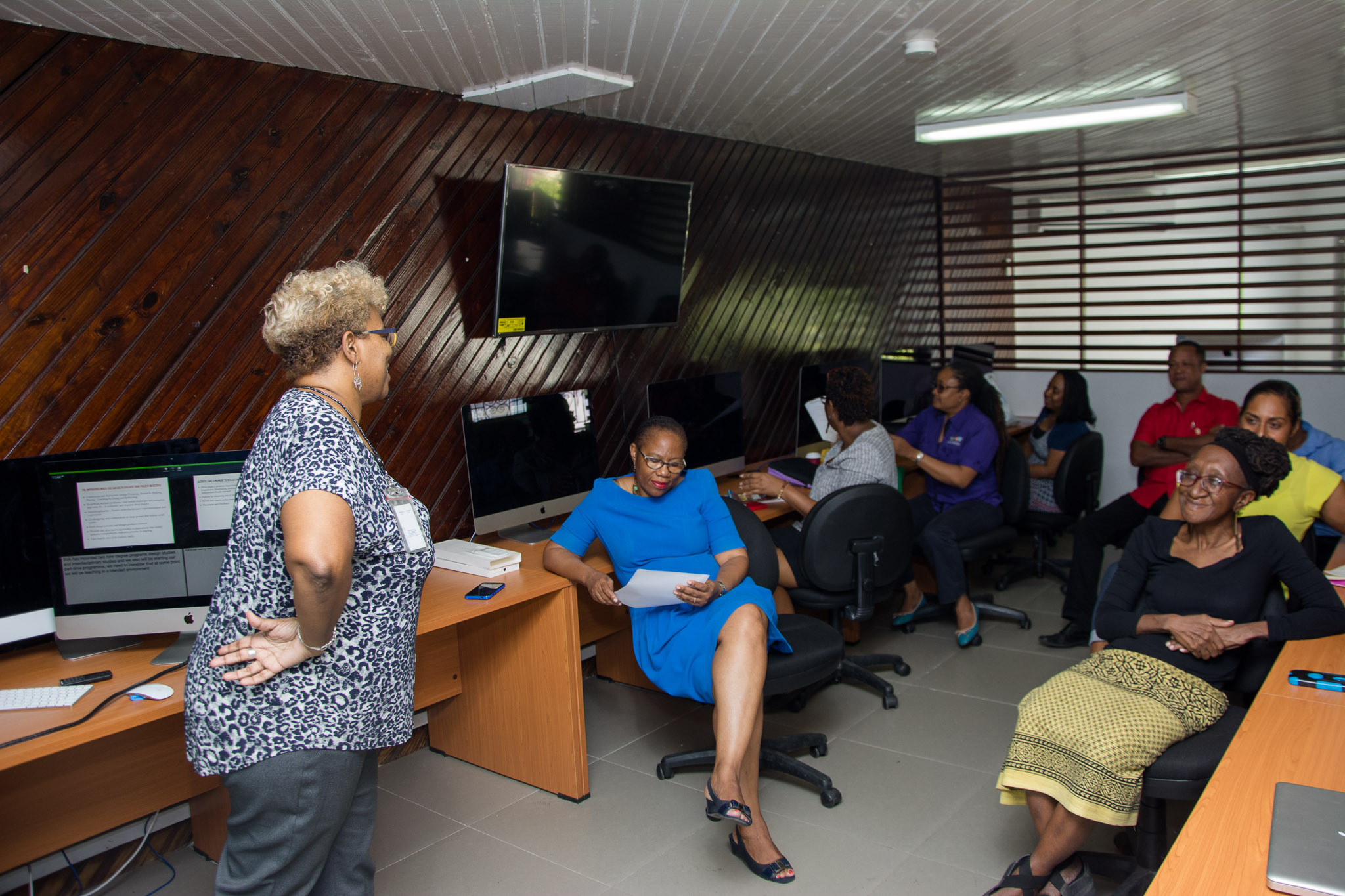
The Unit 5 Exhibition took place in February 2017 at the School of Visual Arts at the Edna Manley College of the Visual and Performing Arts. The event began at 11:10 a.m. with about 6 participants with up to 7 more participants by 11:20 am. Eventually, there were up to 12 participants.
The time and date chosen was the most convenient after speaking to some of the participants before hand.
Importance of the audience selected
The selected audience was stakeholders from various departments at the college. Participants included the Vice-Principal of Academic and Technical Studies and member of the Education Board of Studies, Dean of the School of Visual Arts, faculty from the Visual Communications department: Illustration, Animation, Foundation Studies and Visual Communication Design, a senior coordinator of the newly established Interdisciplinary Studies programme, HOD of the Applied Arts department a senior lecturer from Art Education and lastly a senior lecturer from the Arts Management and Humanities department, whose additional role at the college this year was to organize research initiatives for the annual Research Day in February.
The participants were selected for a specific reasons:
At the institutional level the college like every other institution has to undergo an accreditation assessment for it’s degree granting programme. During this process, material evidence is gathered from both students and lecturers including members of the college alumni. With each cycle we endeavour to update where necessary the curriculum plans, content, assessment and evaluation instruments in time for scrutiny by external examiners. Therefore, having a participant from the Educational board responsible for programme and course development, assessment standards was necessary.
In addition, the college has acquired new technologies to match the surge of interest in some of the recently added technology-driven courses plus the upgrading of older ones. Visual communications design was one of those programmes in need of evaluation in terms of teaching approaches, student engagement and retention of knowledge, quality of work, student management of assignments and projects, evidence of research or lack thereof and the use of emerging technologies not just for output but for critical making. Outside of this department, students from the applied arts on their own accord, choose individual courses to enable them to explore emerging technology in their own disciplines and practice. For instance, Jewellery, Ceramics, Sculpture with CAD etc. Therefore, it was important have a mix of faculty responsible for various other courses other than visual communication.
More research initiatives are being organized and encouraged by the institution and is a call for more involvement and submissions from departments, faculty and students. A participant engaged in the organization of such activities was essential.
Another important participant was one of my final year students who volunteered to give me moral support and also assisted in getting the room ready.
Readying the space
The Creative Crowding Lab (Lab 4) in the visual communications department was the site of the exhibition. The lab had enough seats if all the participants attended. In addition, it was an opportunity for some of the participants to visit the space, which they had not seen before. Also, I wanted them to feel comfortable in the space as we will be using in the year for more staff development workshops such as this one.